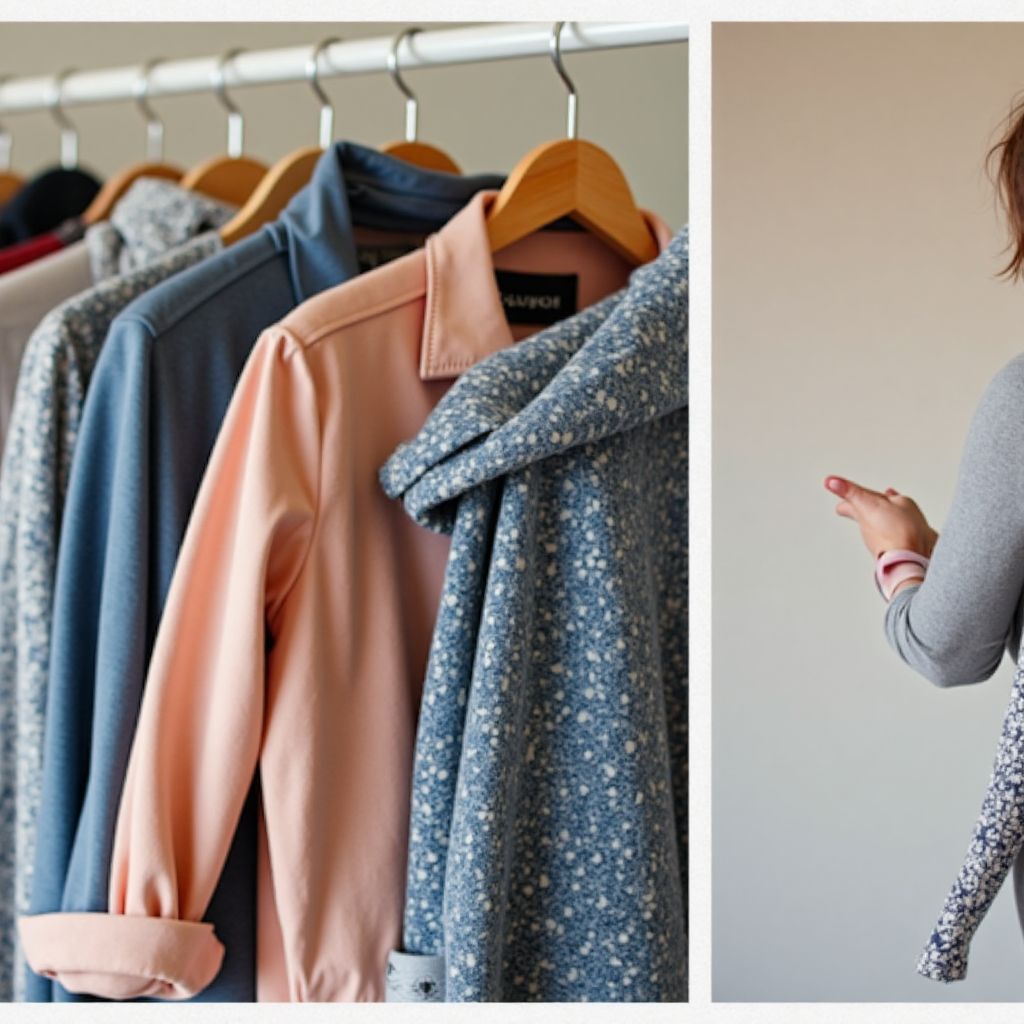
You do not need a degree in textile science or decades of experience in a tailor’s workshop to identify a well-made garment. In fact, one of the most reliable tools for judging clothing is already attached to your body: your hands. After ten years of writing about fashion, interviewing designers, visiting textile mills, and examining thousands of garments at every price point, I can tell you that the touch test is often more honest than the price tag, the brand name, or even the product photo. Fast fashion has become remarkably skilled at imitating the look of luxury, but it almost always falls short when you close your eyes and let your fingertips do the work.
The touch test is not about being snobbish or rejecting affordable clothing. It is about understanding what makes a garment durable, comfortable, and genuinely worth your money. A cheaply made shirt can look identical to a high-end version on a hanger, but the moment you touch it, the differences become clear. Quality clothing tends to feel substantial, smooth, warm, or crisp in ways that fast fashion often cannot replicate because quality begins with raw materials and construction, not just visual design. This guide will walk you through exactly how to use your sense of touch to separate lasting investment pieces from disposable trends.
Why Your Hands Know More Than Your Eyes
Our eyes are easily fooled. Digital screens flatten texture, lighting can make polyester look like silk, and strategic photography hides thin fabric and loose stitching. But our hands have evolved over millions of years to detect subtle differences in temperature, density, smoothness, and weight. When you touch a garment, you are reading a physical record of how it was made. Short-staple cotton, heavy synthetic coatings, weak yarns, and rushed seams all produce distinct tactile signatures that you can learn to recognize within seconds.
Fast fashion brands rely on the fact that most shoppers judge clothing visually and quickly. They invest heavily in prints, colors, and silhouettes that photograph well, while cutting costs on the invisible or tactile aspects of the garment. The result is clothing that may look appealing on a mannequin or in an Instagram post but feels flimsy, rough, or plasticky in person. By slowing down and touching the fabric before you look at the price tag, you immediately shift the balance of power back to yourself as a consumer.
The Five-Second Hand Feel: First Contact
The first step in the touch test is simple: place your palm flat on the fabric and press lightly. Do not grab it yet. Just let your hand rest against the surface. Quality fabric often has a sense of depth and presence. It may feel cool and dense, like a good cotton poplin, or warm and soft, like a fine merino wool. Fast fashion fabrics, by contrast, frequently feel thin, slippery, or unnaturally uniform. A cheap polyester blouse may feel slippery in a way that is almost oily, while a quality silk blouse will feel smooth but with a subtle, dry softness.
Start with a Gentle Palm Press
When you press your palm flat, pay attention to whether the fabric collapses immediately or offers a slight resistance. Dense weaves and high-quality knits have body. They hold their structure even when touched. Cheap fabrics often feel papery or insubstantial, as if they would tear if you pulled too hard. A good test is to press the fabric between your palm and your body or a table. If it feels as though there is almost nothing between your hand and the surface below, that is a sign of low fabric weight and likely low durability.
Rub the Fabric Between Thumb and Forefinger
Next, take a small section of the fabric and rub it gently between your thumb and forefinger. This reveals more than you might expect. Natural fibers like cotton, linen, wool, and silk have a slightly irregular texture because they come from living organisms. They are not perfectly uniform, and that slight variation is a sign of authenticity. Synthetic fibers such as polyester, nylon, and acrylic often feel overly consistent, almost slick or rubbery, because they are extruded through machines in continuous filaments.
- Quality natural fibers feel soft but not slippery, with subtle variations in texture.
- Cheap synthetics often feel slick, plasticky, or unnaturally smooth.
- High-quality synthetics can mimic natural fibers, but they usually lack the temperature responsiveness of natural materials.
- Blends can be acceptable, but check whether the blend feels balanced rather than dominated by a cheap synthetic hand.
The Warmth Test
Another useful trick is to feel the temperature of the fabric. Natural fibers like wool, cotton, and linen tend to adjust to your body temperature quickly. They often feel warm or neutral when held. Synthetics, especially polyester and acrylic, often feel cool or clammy at first and do not breathe as well against the skin. Hold the fabric against the inside of your wrist for a few seconds. If it feels sticky or suffocating, that is a warning sign. Quality clothing should feel comfortable against your skin, even if the garment is not meant to be worn next to the skin directly.
Reading Fiber Content with Your Fingertips
Once you have completed the basic hand feel, it is time to think about specific fibers. Each fiber has a distinct tactile personality. The more you practice, the easier it becomes to identify fiber content by touch alone, even before checking the label. This skill is invaluable because brands sometimes use misleading names or vague descriptions, but the fabric itself cannot lie to your hands.
Cotton: Soft, Crisp, or Rough?
High-quality cotton, such as long-staple Egyptian or Pima cotton, feels exceptionally smooth and soft, with a slight coolness and a gentle luster. When you rub it between your fingers, it should feel clean and dry, almost like high-quality paper but softer. Cheap cotton, made from short staple fibers, feels rougher, fuzzier, and may pill quickly. If you hold a cheap cotton T-shirt up to the light, you may see an uneven, thin weave. In your hand, it may feel harsh or overly stiff. Quality cotton knits should have a springy, resilient feel, while cheap knits may feel limp or flimsy.
Wool: Warm Spring vs. Itchy Coating
Wool is one of the easiest fibers to test by touch. A high-quality merino wool or cashmere garment feels soft, warm, and springy. When you squeeze it gently, it should bounce back. The fibers are fine and flexible, so they do not prickle. Cheap wool or wool blends often feel coarse, scratchy, or stiff. They may also feel unnaturally heavy or coated, which suggests the use of low-quality wool fibers or heavy chemical treatments. If a wool sweater feels itchy within seconds, it is likely made from short, coarse fibers that will not wear well over time.
Silk and Viscose: The Slippery Distinction
Silk is often imitated by polyester and viscose rayon, but the touch test can help you tell them apart. Real silk feels smooth and soft but with a slight dry warmth. When you rub silk between your fingers, it does not produce static or feel slippery like polyester. Silk also warms quickly to the touch. Polyester, by contrast, often feels cooler and more slippery, and it may produce a faint static cling. Viscose or rayon can feel soft and drapey, but it often lacks the subtle crispness and warmth of real silk. If the fabric feels slick and cool like plastic, it is probably not silk.
Linen and Hemp: Texture with Integrity
Linen is naturally textured and slightly irregular. High-quality linen feels crisp, cool, and substantial, with a dry hand that softens with every wash. Cheap linen or linen blends often feel papery, stiff, or overly wrinkled without the soft underlying strength. Hemp is similar but even stronger and more textured. These fibers should never feel slippery or synthetic. A quick touch test for linen is to crumple a small section in your hand. It should wrinkle easily and hold the crease, but it should also feel breathable and cool against the skin.
Seams, Stitching, and Hidden Construction
The touch test extends beyond the surface of the fabric. Run your fingers along the seams, hems, and edges of the garment. Quality clothing is constructed with care, and that care is visible and tactile. Fast fashion often hides sloppy stitching in places most shoppers do not look, but your fingertips can find the flaws quickly.
The Seam Rub
Turn the garment inside out and run your thumb along the seams. In a well-made garment, the seams should feel flat, smooth, and secure. The stitches should be even and tight, with no loose threads or irregular gaps. In cheap clothing, seams may feel bulky, rough, or uneven. You may feel loose threads, knots, or areas where the fabric is pulling. A quality seam should not irritate your skin. If the seam feels scratchy or sharp, the garment will likely be uncomfortable to wear for more than a few minutes.
The Seam Allowance Check
Pinch the fabric next to a seam and feel how much extra fabric is inside. Quality garments often have wider seam allowances, which allow for alterations and add durability. Fast fashion garments frequently have narrow or uneven seam allowances because fabric is a major cost. If the seam allowance feels almost nonexistent, the garment is less likely to survive stress and more likely to tear at the seams.
The Pull Test
Gently pull on the seam on both sides. A high-quality seam will hold firm with only slight give. A cheap seam may show gaps between stitches or even begin to separate. Be careful not to damage clothing in a store, but a gentle tug is usually enough to reveal weak construction. If the fabric puckers or the threads stretch excessively, that is a red flag. Quality stitching should feel secure and locked in place.
Weight, Density, and Drape
Weight is one of the most immediate signals of quality. Hold the garment by the shoulders or waist and let it hang. Quality clothing often has a sense of gravity. It drapes naturally and falls smoothly, without clinging or floating awkwardly. Fast fashion garments are frequently lighter than they look, because thinner, cheaper fabrics are used to cut costs. For example, a quality white button-down shirt should feel dense enough to hold its shape, while a cheap version may feel almost translucent and floaty.
How Heavy Should It Feel?
There is no universal rule for how heavy a garment should be, because different fibers have different natural weights. But a good guideline is that the fabric should feel appropriate for its purpose. A summer linen shirt should feel crisp and airy, but not so thin that you can see through it easily. A winter coat should feel substantial and solid, not hollow. When you hold a garment, ask yourself whether the weight matches the design. A blazer that feels as light as a T-shirt is probably not going to maintain its structure or keep you warm.
The Drape Observation
Drape refers to how fabric falls and moves. High-quality fabrics, even lightweight ones, have a natural fluidity and grace. They do not stick to the body in a static way or puff out stiffly. To test drape, hold the garment up and let it fall. A quality fabric will fall in smooth, rounded folds. A cheap fabric may crumple, wrinkle, or hold an unnatural shape. Run your hand over the hanging fabric. If it feels stiff or springy in a synthetic way, the drape will likely be poor.
Hardware, Linings, and Finishing Touches
The touch test is not limited to fabric. Zippers, buttons, linings, and other finishing details also reveal a great deal about quality. Run your fingers over these components. Quality hardware feels solid, smooth, and secure. Cheap hardware often feels hollow, rough, or flimsy. A zipper should glide smoothly without catching. Buttons should be firmly attached and feel dense, not thin and brittle.
The Lining Test
If a garment is lined, touch the lining as carefully as the outer fabric. A quality lining is usually made from natural or high-quality synthetic fibers that feel smooth and breathable. It should not be rough, scratchy, or overly shiny. A cheap lining may feel like plastic and make you sweat. In jackets and dresses, a well-constructed lining allows the garment to move with the body and protects the outer fabric. If the lining feels uncomfortable or flimsy, the entire garment will likely be unpleasant to wear.
The Button and Zipper Check
Rub your thumb over buttons. Quality buttons, such as those made from shell, horn, or thick resin, feel cool, smooth, and solid. Cheap buttons often feel thin, sharp at the edges, or rough. For zippers, test the pull. A quality zipper operates quietly and smoothly, while a cheap zipper may catch or feel gritty. These small details may seem insignificant, but they are often the first things to break on a fast fashion garment. Replacing a zipper is expensive, so a smooth, sturdy zipper is a sign the manufacturer did not cut corners.
How to Train Your Hands for Better Shopping
Like any skill, the touch test improves with practice. The next time you go shopping, spend a few minutes comparing garments at different price points. Touch a high-end cotton T-shirt and then a fast fashion version. Feel the difference in density, softness, and stitch quality. Visit a fabric store and handle swatches of silk, wool, linen, and polyester. Close your eyes and focus only on the sensation. Over time, your fingers will learn to recognize the subtle signals of quality.
It also helps to build a mental library of tactile reference points. When you find a garment that feels exceptional, make a note of the brand, fiber content, and price. Then use that as a benchmark for future shopping trips. You do not need to become an expert in textile manufacturing. You just need to trust the evidence your hands provide. The more you practice, the faster you will be able to identify quality clothing without even thinking about it.
- Press your palm on the fabric to check density and body.
- Rub the fabric between your fingers to feel for natural texture or synthetic slickness.
- Hold the fabric against your wrist to test breathability and warmth.
- Inspect seams with your fingertips for even, secure stitching.
- Feel the weight and drape by letting the garment hang naturally.
- Test hardware such as zippers and buttons for smoothness and solidity.
The Emotional Difference You Can Feel
Beyond the practical signs of durability, there is an emotional component to the touch test. Quality clothing simply feels better to wear. It moves with you, breathes with you, and becomes softer over time. Fast fashion often feels disposable from the first wear because it is not designed to last or to be comfortable. By learning to trust your hands, you will naturally gravitate toward pieces that feel good on your body and last longer in your closet.
This does not mean you must never buy affordable clothing again. There are honest, well-made garments at every price point, and sometimes a synthetic blend is the right choice for a specific purpose, such as activewear or travel clothing. The touch test is not about rejecting lower prices. It is about making informed decisions. When you know how to assess fabric, seams, and hardware, you can find quality on any budget and avoid overpaying for garments that simply imitate quality through clever marketing and photography.
Conclusion: Let Your Hands Be the Judge
The next time you are tempted by a trendy piece online or in a store, pause and put your hands on it first. Close your eyes if necessary and tune out the visual noise. Press, rub, pull gently, and run your fingers along the seams. Pay attention to whether the fabric feels alive or lifeless, substantial or flimsy, breathable or suffocating. These tactile signals are honest and immediate. They tell you not only what the garment is made of, but how it was made and how it will behave after repeated wear.
In a world of fast fashion, your hands are a powerful defense against clever marketing and deceptive imagery. The touch test costs nothing, requires no special equipment, and can be done in seconds. With practice, it becomes second nature. You will find yourself automatically rejecting rough seams, thin fabric, and plasticky synthetics, and gravitating toward pieces that feel as good as they look. In the end, the best judge of quality is not a brand logo or a price tag, but the simple wisdom of your own fingertips.
Leave a Reply