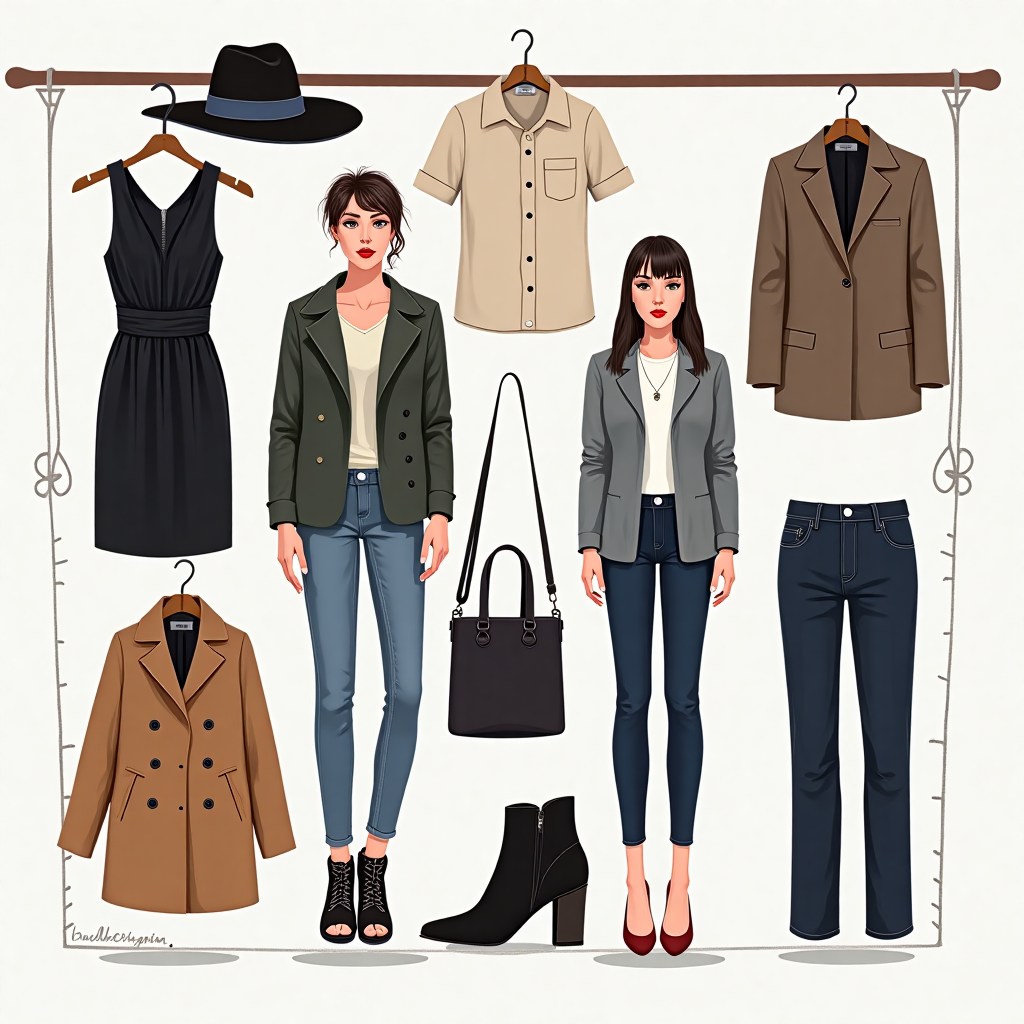
Most people do not have a shortage of clothes. If anything, they have the opposite problem: closets stuffed with garments, yet a daily feeling of having nothing to wear. This paradox happens because a wardrobe is rarely built with intention. Instead, it accumulates through impulse purchases, fleeting trends, gifts that miss the mark, and emotional shopping. The result is a closet full of pieces that do not work together, do not fit properly, and do not reflect the life you actually live. Building a wardrobe you actually wear is not about owning more or chasing a minimalist number. It is about creating a system of clothing that supports your daily routine, flatters your body, and expresses your identity without requiring constant effort.
The process requires honesty, patience, and a shift in mindset. You have to stop asking whether an item is “cute” and start asking whether it earns its place in your real life. A wearable wardrobe is built around repetition, comfort, versatility, and personal style. It is composed of pieces that you reach for again and again because they are reliable, comfortable, and make you feel like yourself. This guide will walk you through a step-by-step method to audit what you own, define what you actually like, fill the gaps strategically, and maintain a closet that works rather than overwhelms.
1. Understand Why Your Current Wardrobe Is Not Working
Before you can fix your closet, you need to understand why it feels broken. For many people, the disconnect comes from buying for an imaginary life rather than a real one. You might have a closet full of cocktail dresses, but your weekdays consist of office meetings and school runs. You might own five blazers even though you work from home in casual settings. Those pieces are not inherently bad, but they become dead weight when they do not match your actual schedule. An honest look at how you spend your time is the foundation of a wardrobe you wear.
Another common issue is that many closets are built around individual items instead of outfits. You purchase a bright printed skirt because it is beautiful, but then you realize you have no top, shoe, or jacket that pairs well with it. The skirt hangs untouched not because you dislike it, but because wearing it requires extra pieces you do not own. A functional wardrobe thinks in combinations, not isolated highlights. When every piece can be worn with at least three other items, the number of possible outfits increases without adding more clothes.
Emotional clutter also plays a role. Some items remain in your closet because they represent a past version of you, a goal weight, an expensive mistake, or a memory you are not ready to release. Letting go of these pieces can be difficult, but holding onto them makes daily dressing harder. They create noise and guilt every time you open the closet door. A wardrobe you actually wear requires you to keep only what serves your present body and present life, not what you hope will work someday.
2. Define Your Personal Style Before You Buy Anything
Many people skip style definition and go straight to shopping. That is why they end up with a closet full of random pieces that do not feel cohesive. Defining your personal style does not mean boxing yourself into a single label. It means identifying the recurring colors, silhouettes, fabrics, and moods that make you feel most confident. When you know your style keywords, shopping becomes easier and your existing closet starts to make more sense.
Identify Your Style Keywords
Think of three to five words that describe how you want to feel in your clothes. Words like relaxed, polished, edgy, minimal, romantic, structured, sporty, or classic are all useful starting points. For example, your keywords might be “clean, comfortable, and modern.” Every potential purchase can then be checked against those words. If a piece is fussy, uncomfortable, or overly traditional, it fails the test. The goal is to create a filter that removes items that do not belong in your wardrobe, no matter how attractive they look on a hanger.
Build a Visual Reference
Create a mood board using saved images from magazines, social media, or online retailers. Pin outfits that make you stop and think, “Yes, that feels like me.” After collecting twenty or thirty images, look for patterns. You may notice a preference for neutral colors, oversized outerwear, high-waisted trousers, or minimal accessories. Those repeated details are clues to your authentic style. Use them as a guide for future purchases and for editing your current closet.
Separate Style from Trend
Trends can be fun, but they should not form the backbone of your wardrobe. A trend-driven closet ages quickly and often contains pieces that look dated within a season or two. Instead, let trends show up in lower-cost accessories or single statement items that you can easily replace. Your core wardrobe should be built from pieces with lasting silhouettes and colors that suit you. This does not mean boring. It means the foundation is stable enough that you can add personality without losing day-to-day wearability.
3. Conduct a Complete Closet Audit
A closet audit is the most transformative step in building a wardrobe you actually wear. It requires time, a full-length mirror, and a willingness to be honest. Take everything out of your closet and dresser. Yes, everything. Pile it on your bed so you can see the full volume of what you own. This visual shock is often enough to inspire change. Then try on items in outfits, not just as single pieces. You cannot accurately judge a pair of trousers unless you see them with the tops and shoes you would actually wear.
Sort Into Clear Categories
As you work through your clothes, create separate piles: keep, alter, store, and let go. The keep pile should contain items that fit well, feel good on your body, and align with your style keywords. The alter pile is for pieces you love but that need a hem, a waist adjustment, or a small repair. Be realistic: if an item has been waiting for alterations for more than a year, either book the tailor immediately or let it go. The store pile is for seasonal items that genuinely belong to another time of year. Do not use this as an excuse to hide clothes you never wear. Finally, the let go pile includes anything that is damaged beyond repair, badly faded, uncomfortable, or no longer reflects who you are.
Analyze Your Most-Worn Pieces
Before you discard anything, identify the items that you already wear most often. These are your wardrobe workhorses. Ask yourself what makes them so easy to reach for. It might be the soft fabric, the forgiving fit, the neutral color, or the fact that they go with everything else you own. Write down those qualities. Your future purchases should share them. In the same way, look at the items you never wear and find the common reasons. Maybe they require constant adjusting, they itch, they show wrinkles easily, or they only work with one specific outfit. Those are patterns to avoid in the future.
Turn Gaps Into a Shopping List
After the audit, you will likely notice missing categories. Maybe you have seven pairs of jeans but no trousers for formal occasions. Maybe you have plenty of tops but no layering pieces like cardigans or jackets. Write down exactly what you need, including the color and fit that will work with your existing wardrobe. This list becomes your shopping guide. It prevents you from buying yet another black top when you actually need a light neutral layering piece. The audit is not just about removing things; it is about revealing what should be added.
4. Build a Foundation of Versatile Essentials
A wardrobe you actually wear is built on a foundation of reliable essentials. These are not necessarily a strict list dictated by fashion magazines. They are the pieces that solve your daily dressing problems and pair well with almost everything else in your closet. For most people, this foundation includes well-fitting jeans or trousers, neutral knitwear, a few quality t-shirts or blouses, a tailored jacket or coat, and comfortable shoes that can handle daily life.
Choose Pieces That Work Together
The key to a functional foundation is compatibility. A wardrobe where eighty percent of the items work together creates effortless outfits. Neutral colors like black, white, gray, beige, navy, and olive are easy to mix, but you do not have to abandon color entirely. Choose a few accent shades that repeat throughout your wardrobe so even colorful pieces can coordinate. If you love burgundy, having a burgundy sweater, a scarf, and a pair of socks does not mean they all have to match exactly, but they should share a tonal range that ties outfits together.
Prioritize Fit, Fabric, and Function
Fit is the single biggest factor in whether you wear something. A cheap t-shirt that fits perfectly will be worn more than an expensive designer piece that pulls, gapes, or squeezes. Learn the measurements of garments that flatter you, and do not be afraid to tailor. Hemming trousers, shortening sleeves, and taking in waistbands can transform a mediocre piece into one you reach for constantly. Fabric matters too. Natural fibers like cotton, wool, linen, and silk often feel better and last longer than synthetic alternatives. Pay attention to how a fabric reacts to washing and wearing. If a garment wrinkles excessively, pills quickly, or feels sweaty after an hour, it will likely stay in your closet.
Examples of a Strong Core Wardrobe
- A well-cut pair of dark or medium-wash jeans that can be dressed up or down
- Neutral trousers in a comfortable but tailored fabric for work or events
- A white or neutral button-down shirt that works under sweaters, blazers, or alone
- A few quality t-shirts in colors that flatter your skin tone
- A knit sweater or cardigan in a versatile shade
- A structured blazer or jacket that instantly polishes any outfit
- A coat or outerwear piece that suits your climate and daily routine
- Comfortable shoes you can walk in, such as clean sneakers, loafers, or low boots
- A simple dress or one-piece outfit for days when you want minimal effort
5. Shop with Intention, Not Impulse
Once you have defined your style and audited your closet, shopping becomes a more deliberate activity. The goal is no longer to chase every sale or trend but to fill specific gaps with pieces that meet your standards. Before buying anything, ask yourself if the item matches your style keywords, fits into your existing wardrobe, and solves a real problem. If the answer is no, leave it behind no matter how tempting the price is.
Use the Three-Outfit Rule
A powerful tool for evaluating a potential purchase is the three-outfit rule. Before you buy an item, mentally create three complete outfits using pieces you already own. If you cannot come up with at least three, the item is not versatile enough to earn a place in your closet. This rule works especially well for statement pieces that catch your eye but may not integrate with your existing wardrobe. It forces you to think in combinations rather than isolated pieces.
Adopt the 48-Hour Waiting Period
Impulse purchases are often driven by emotion, not need. To break this pattern, implement a waiting period for any non-essential clothing purchase. Put the item on hold, close the browser tab, or leave the store empty-handed. If you still remember it and genuinely feel excited after 48 hours, then it may be worth purchasing. More often than not, the urge fades and you save money while protecting your wardrobe from clutter.
Embrace Cost Per Wear
Instead of focusing solely on the price tag, think about cost per wear. A high-quality coat that costs three hundred dollars but is worn one hundred times over five years has a cost per wear of three dollars. A thirty-dollar top worn once has a cost per wear of thirty dollars. This perspective helps you justify investing in better essentials while avoiding disposable trend pieces. It also encourages you to buy clothes you truly need rather than items that will sit unused.
6. Create a Seasonal System That Keeps Things Manageable
A wardrobe you actually wear does not stay static. It changes with the seasons, your lifestyle, and your body. The trick is to create a system that makes those changes easy. Instead of letting your entire closet exist in chaos all year, rotate seasonal items. Store heavy coats and chunky knits during summer, and pack away linen dresses and shorts during winter. This keeps your visible wardrobe focused on what you can actually wear right now, reducing decision fatigue every morning.
Rotate by Season, Not by Guilt
At the start of each season, treat your closet like a small boutique. Bring out the items for the coming months and check them for fit, condition, and relevance. If something no longer fits or you did not wear it last season, ask why. It might need to be altered, donated, or replaced. Seasonal rotation keeps your wardrobe feeling fresh without buying new clothes constantly. It also makes you more aware of what you already own so you do not accidentally buy duplicates.
Use the One-In-One-Out Rule
To prevent your closet from creeping back into overstuffed territory, adopt the one-in-one-out rule. Every time you buy a new piece, remove one similar item. If you buy a new pair of jeans, donate an old pair that is worn out or no longer fits. This rule keeps your wardrobe at a manageable size and forces you to evaluate whether a new purchase truly adds value. It also creates a habit of intentional ownership rather than endless accumulation.
7. Maintain, Repair, and Let Go Regularly
Even a well-built wardrobe requires ongoing maintenance. Clothes stretch, fade, pill, and lose their shape. Shoes wear down, zippers break, and buttons fall off. If you ignore these small issues, your favorite pieces slowly become unwearable. Set aside time every few months to inspect your wardrobe and handle repairs. A simple needle and thread can reattach a button. A tailor can fix a split seam or shorten a hem. A shoe repair shop can replace soles and polish leather. These small investments keep your clothes in rotation and save you from having to replace them prematurely.
Adopt a Care Routine for Longevity
How you wash and store your clothes dramatically affects how long they last. Read care labels and follow them more often. Wash items in cold water when possible, turn delicate garments inside out, and avoid over-drying. Use padded hangers for structured pieces and fold heavy knits to prevent stretching. Give shoes a day to rest between wears, and use shoe trees to maintain their shape. These habits may feel like extra work at first, but they quickly become routine and keep your wardrobe looking better for longer.
Practice Regular Letting Go
Letting go is not a one-time event. As your body changes, your job changes, and your taste evolves, your wardrobe should evolve too. Every few months, do a quick sweep of your closet. Pull out anything you have not worn in the past year, aside from truly seasonal or special occasion pieces. Ask yourself if you would buy it again today at full price. If the answer is no, consider donating it. The more frequently you edit, the less overwhelming the task becomes. A smaller wardrobe of clothes you actually wear always beats a large wardrobe of clothes that only stress you out.
Conclusion: A Wardrobe That Works for Real Life
Building a wardrobe you actually wear is not a one-day project or a rigid set of rules. It is a shift in the way you think about clothing. Instead of asking what is trendy, ask what makes you feel comfortable and confident. Instead of buying for an imaginary occasion, buy for the life you have right now. Instead of judging a closet by its size, judge it by how many outfits you can create without a second thought. A functional wardrobe is a tool that simplifies your mornings, saves you money, and reduces the mental load of getting dressed.
Start with an honest audit, define your style with clear keywords, and build a core of versatile pieces that fit well and feel good. Then shop with intention, rotate seasonally, and maintain what you own. Let go regularly without guilt, because clothes are meant to be worn, not to sit in storage as monuments to past purchases or future hopes. When you approach your wardrobe with this mindset, you will find yourself reaching for the same loved pieces again and again. That repetition is not boring. It is the clearest sign that your wardrobe is finally working for you.
Leave a Reply